
In 2026, the Brawl Stars x Subway Surfers crossover is a closed chapter, not a live event. The collaboration ran in September 2025 and wrapped on September 30, so players cannot currently farm Rails or open event Boom Boxes unless Supercell reruns it. Even so, the event remains a clean case study in how Brawl Stars builds a limited-time economy. For anyone researching the crossover, planning for a possible rerun, or comparing it with newer 2026 events, the important details are still worth unpacking.
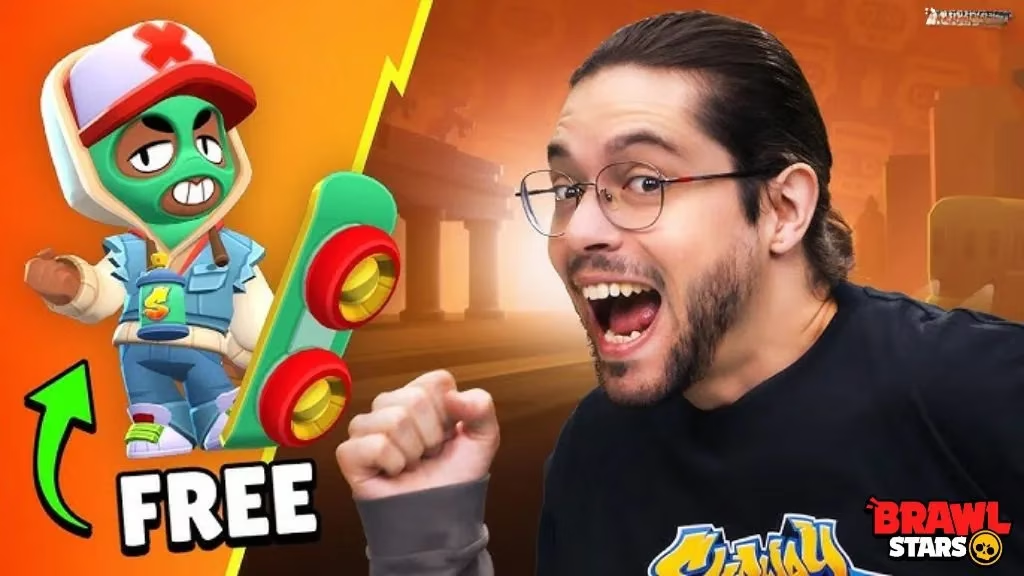
The event at a glance
| Detail | What happened |
|---|---|
| Event window | September 2025, ending September 30 |
| Structure | Four weeks, four cities |
| Headline mode | Subway Run |
| Main currency | Rails |
| Main track | Reward Track |
| Club event | Mega Train replaced Mega Pig in Week 2 |
| New Brawler | Mina arrived in Week 3 |
| Finale | Tokyo contests in Week 4 |
| Maximum free Rails | 624 |
| Key skin target | Jack Ollie skin at 340 Rails |
The launch post also used the name Jake Ollie, so players may see both spellings in older coverage. The Reward Track skin is the same target either way.
Subway Run turned Brawl Stars into a checkpoint race
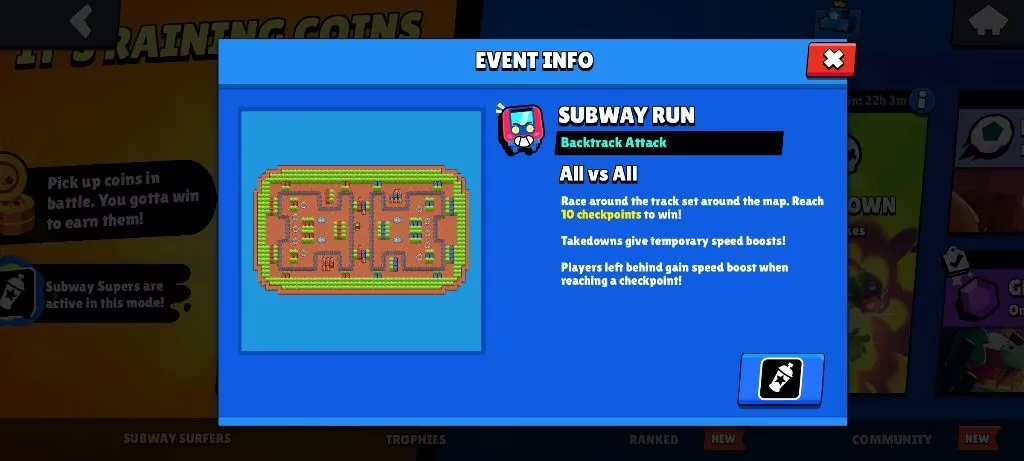
Week 1 began in New York with Subway Run, an All vs All race mode. The goal was simple on paper: be the first to reach 10 checkpoints. In practice, the mode mixed route planning, combat, and catch-up mechanics. Defeating enemies gave speed boosts, while players trailing behind received a speed boost when they hit a checkpoint. That design kept races from becoming a pure runaway, although a strong early lead still mattered.
The event also introduced the Raining Coins modifier. Coins spawned randomly during matches, and players earned bonus rewards at the end of a match. A daily coin cap kept the faucet from running forever, which is a familiar Brawl Stars balancing move.
Rails were the event's connective tissue
The Rail economy was the event's connective tissue, like the copper wiring behind a neon sign: invisible until it powers every reward. Players earned Rails from daily wins, quests, club play, contests, creator codes, and even the Supercell Store. The theoretical free maximum was 624 Rails, but that number assumed a player touched every source.
| Rail source | Maximum Rails | Notes |
|---|---|---|
| Daily wins | 189 | Daily Starr Drops were replaced with Rails during the event |
| Special Quests | 150 | New quest set each week |
| Mega Train club event | 160 | Shared Club Track in Week 2 |
| Week 4 contests | 100 | Top leaderboard placement |
| Creator codes | 20 | Content creator freebies |
| Supercell Store | 5 | Store bonus |
| Total | 624 | Full completion across every source |
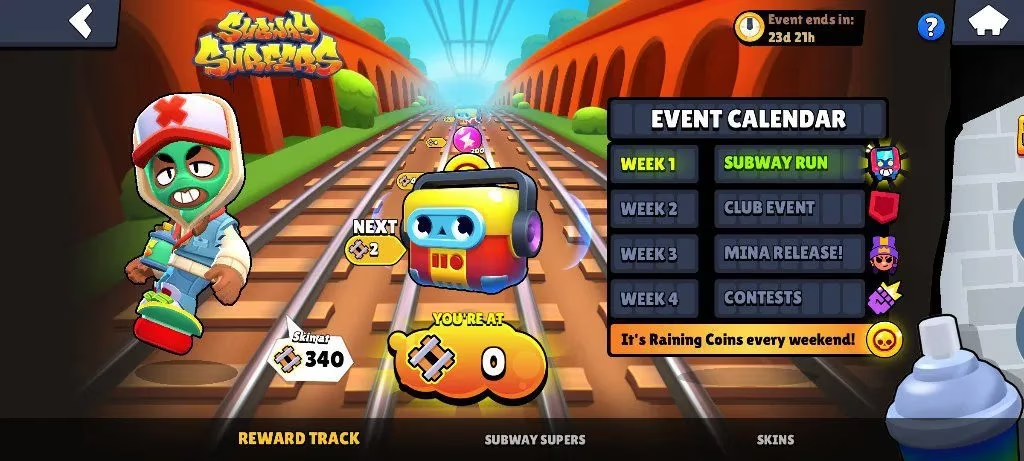
That total mattered because the Reward Track held Boom Boxes, Power Points, Coins, Credits, Gems, Starr Drops, Bling, and even Legendary Starr Drops. The headline skin, Jack Ollie, required 340 Rails. A player did not need the full 624 to claim it, but the extra Rails widened the reward pool considerably.
The Mega Train made clubs pull together
Week 2 moved to Berlin and replaced Mega Pig with Mega Train. The Mega Train made club progress feel like a rowing crew sharing one oar: every member's pull moved the same boat. Clubs collected Rails together on a shared Club Track, and the top prize was the Graffiti Leon skin. The event also attached 160 Rails to this club push, which made active clubs far more valuable than silent ones.
For players who treated Brawl Stars as a solo queue experience, Mega Train was a reminder that clubs can function as logistics networks. A busy club could turn collective wins into a steady Rail flow, while a quiet club left rewards on the platform.
Mina arrived in Week 3
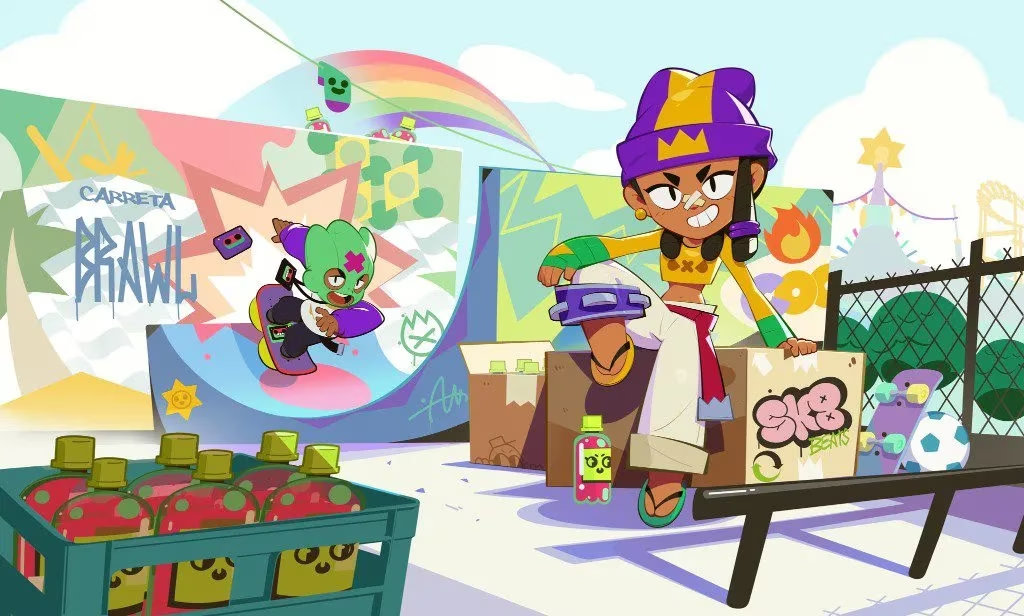
Week 3 brought the new Mythic Brawler Mina. Players were guaranteed to get her by opening 14 Mina-themed Brawler Boxes during the Brawler Release event. The same boxes could also yield the Graffiti Mina skin. That structure gave the week a clear chase target beyond the Rail grind, and it pushed players to engage with the Brawler Box system rather than treating the crossover as a cosmetic side event.
Tokyo contests closed the loop
Week 4 ended in Tokyo with three-day contests. The first Daily contest offered Subway Run, Paint Brawl, or Knockout. The second contest offered Subway Run, Paint Brawl, and Wipeout. The contest system behaved like a subway turnstile that reset every three days: players could ride as hard as they liked, but unused tickets did not keep the gate open.
Leaderboard placement mattered. A top finish could earn 100 Rails, which made contests one of the most concentrated Rail sources in the event. Players who ignored contests could still reach the Jack Ollie skin through daily wins, quests, and club play, but they had less margin for error.
Boom Boxes had a clear reward identity
Boom Boxes were the event's cosmetic lottery, but they were not fully random. Each box guaranteed a Subway Super, the temporary event power that gave the crossover its mechanical flavor. Boxes also contained Subway Surfers skins, Street and Graffiti skins, and other cosmetics.
The exclusions were just as important. Boom Boxes did not include the Jack Ollie skin from the Reward Track, Streetwear Emz, Hypebeast Emz, or Techwear Emz from the new Brawl Pass, Graffiti Leon from the Club Event, or Graffiti Mina from Mina's release Box. That meant players could not simply open boxes and expect every headline cosmetic to fall out. Each reward had its own lane.
Why the 2025 crossover still matters in 2026
As of 2026, the Brawl Stars x Subway Surfers event is best understood as a finished blueprint. It showed how Supercell could blend a race mode, a club track, a new Brawler, and a contest finale into one four-week calendar. The 624-Rail ceiling was generous on paper, but it demanded daily wins, weekly quests, club coordination, contest performance, and a few external pickups. The Jack Ollie skin at 340 Rails was the realistic anchor for most players, while the full track rewarded the grinders.
For current Brawl Stars players, the takeaway is not to hunt for old Rails. It is to recognize the pattern: limited-time currencies, a reward track with a mid-tier skin target, a club event that rewards coordination, and a contest finale that converts skill into currency. If a similar crossover returns in 2026 or later, that structure will likely feel familiar. The subway may have left the station, but the map is still useful.
Data referenced from Polygon helps frame the 2025 Brawl Stars x Subway Surfers event as more than a one-off promotion, since Polygon is widely cited for analyzing how limited-time modes, cosmetic reward tracks, and crossover hooks keep live-service games engaging across multiple weeks. That perspective fits this event's design, where Rails, club participation, and contest-based progression combined into a structured retention loop rather than a simple skin giveaway.
Comments