
Nearly five years after its explosive debut, Nickelodeon All-Star Brawl has solidified its position as a legitimate platform fighter with a dedicated competitive scene. The game, which initially drew comparisons to Super Smash Bros. Brawl for its chaotic potential, has undergone significant meta evolution through patches, balance updates, and community discovery. What began as a roster with clear outliers and underperformers has matured into a more nuanced competitive landscape, though the foundational tier placements from the game's early days continue to inform the current understanding of character strengths and weaknesses. The journey from a novelty brawler to a tournament mainstay has been shaped by both developer support and the relentless optimization by its player base.
The Banned & S-Tier: The Architects of Chaos
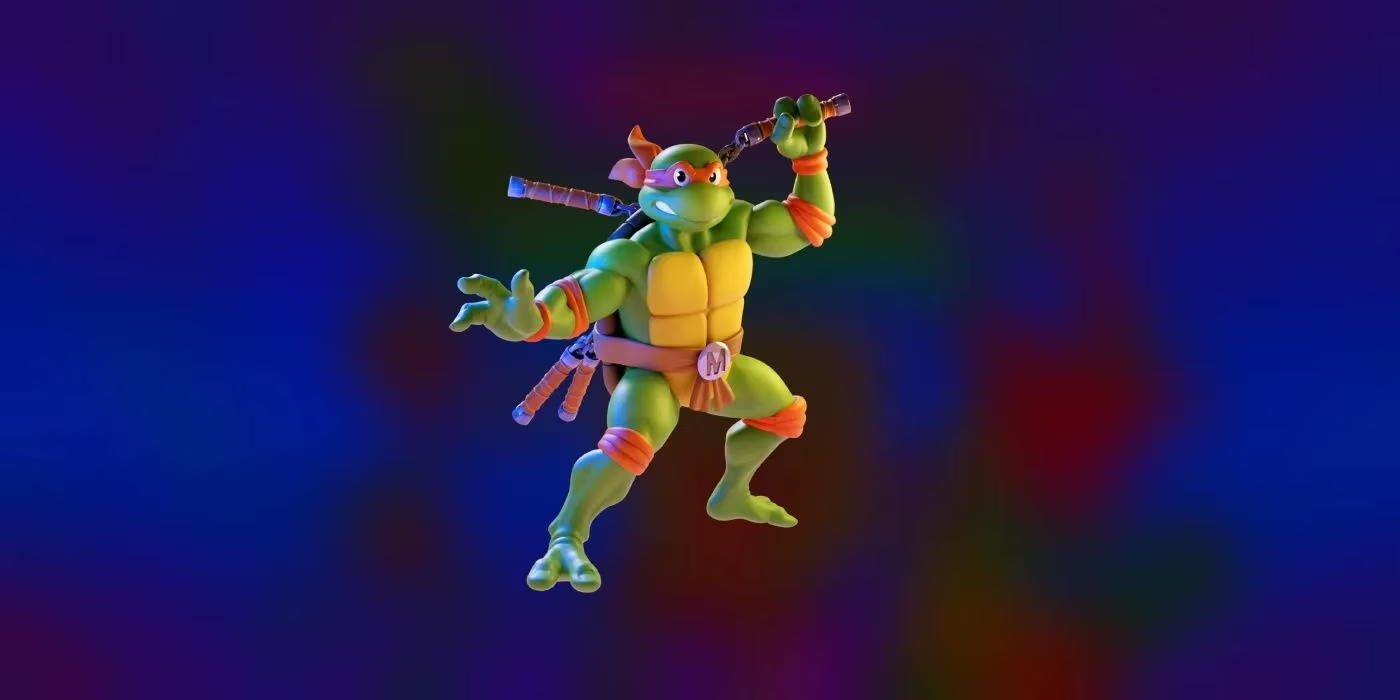
The most infamous chapter in the game's history belongs to Michelangelo, the nunchaku-wielding Teenage Mutant Ninja Turtle. Like a single cog that could dismantle an entire clockwork, Mikey possessed an infinite chain grab exploit that led to his immediate ban from the inaugural Super Smash Con tournament. This early controversy highlighted the game's potential for broken mechanics but also demonstrated the community's commitment to competitive integrity. While patches have long since addressed such extremes, the legacy of the 'Banned Tier' remains a cautionary tale.
Occupying the pinnacle of consistent power are the S-Tier stalwarts:
-
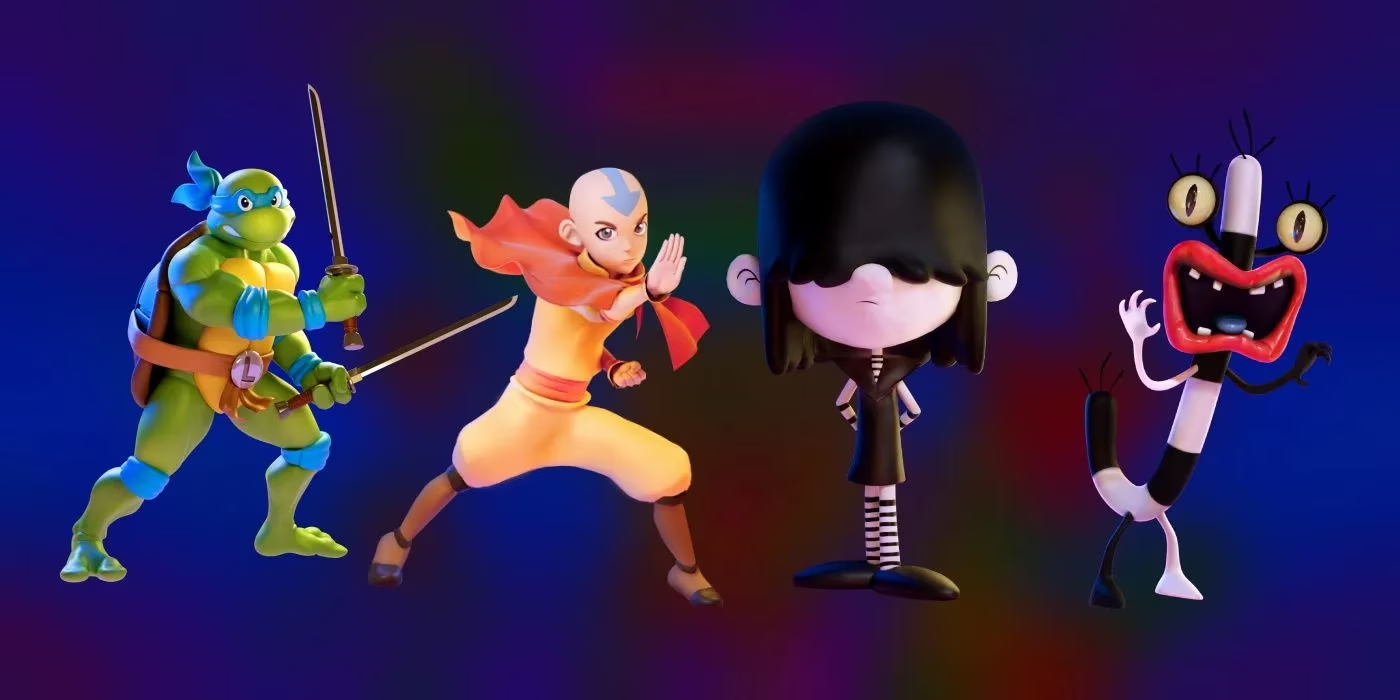
Leonardo: The other Ninja Turtle sibling established himself through precise maneuvering and devastating spike potential, functioning like a surgical scalpel in a brawler's guise.
-
Aang: The Avatar lived up to expectations with air agility that defies gravity, stringing together combos with the fluidity of a bending master.
-
Lucy Loud: This technical phantom leverages moves like "Jump Scare," which stands as one of the game's most potent tools, rewarding players with deep matchup knowledge.
-
Oblina: The Aaahh!!! Real Monsters representative boasts a frustratingly small hitbox, blistering speed, and a toolkit of effective projectiles, making her as elusive and annoying to pin down as a shadow at midnight.
The Reliable Contenders: A-Tier and B-Tier
The A-Tier houses characters who are consistently powerful and often form the backbone of many tournament lineups.
-
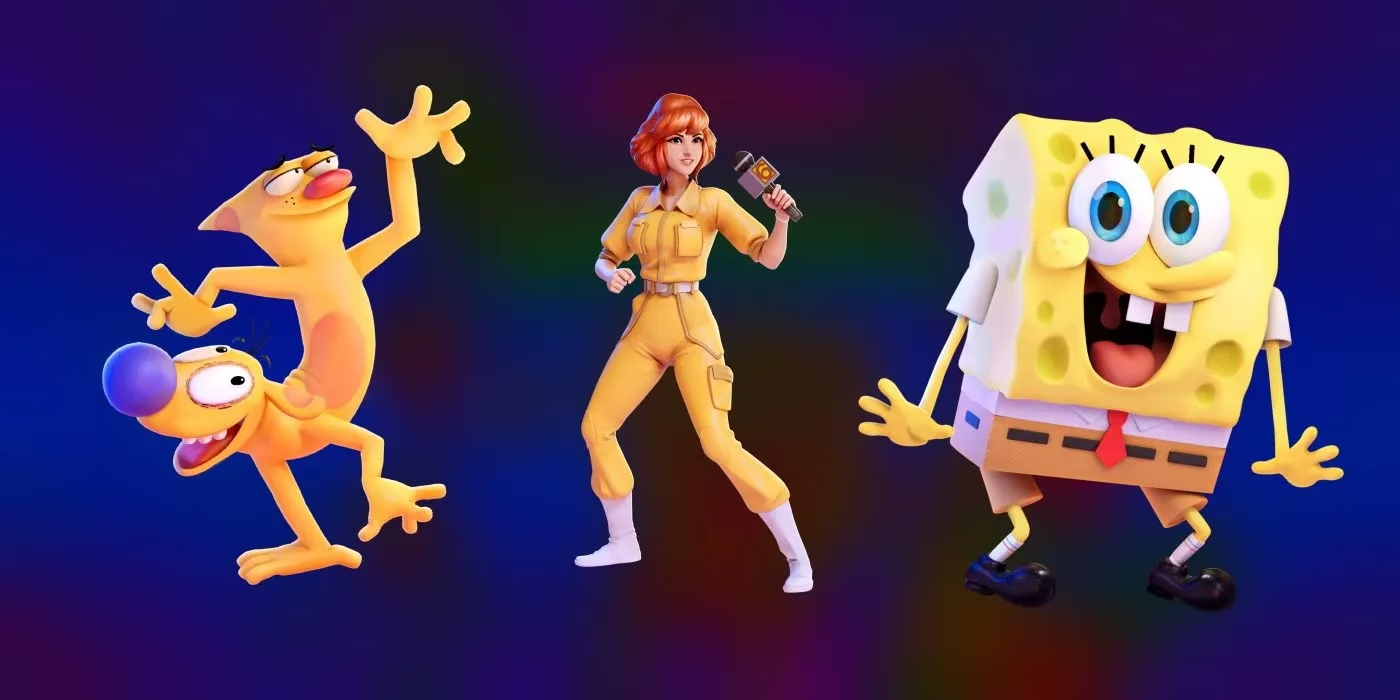
CatDog: This bizarre duo operates with the unpredictable synergy of a two-headed engine, utilizing ridiculous hitboxes and fast aerial moves to control space.
-
April O'Neil: The reporter excels at building damage with her specials, though she often requires clever setups to secure KOs.
-
Spongebob Squarepants: Remaining the quintessential all-rounder, Spongebob is the gateway character whose true depth is unlocked by mastering his deceptively strong aerial game.
The B-Tier is a diverse group of specialists and characters with clear strengths offset by notable weaknesses.
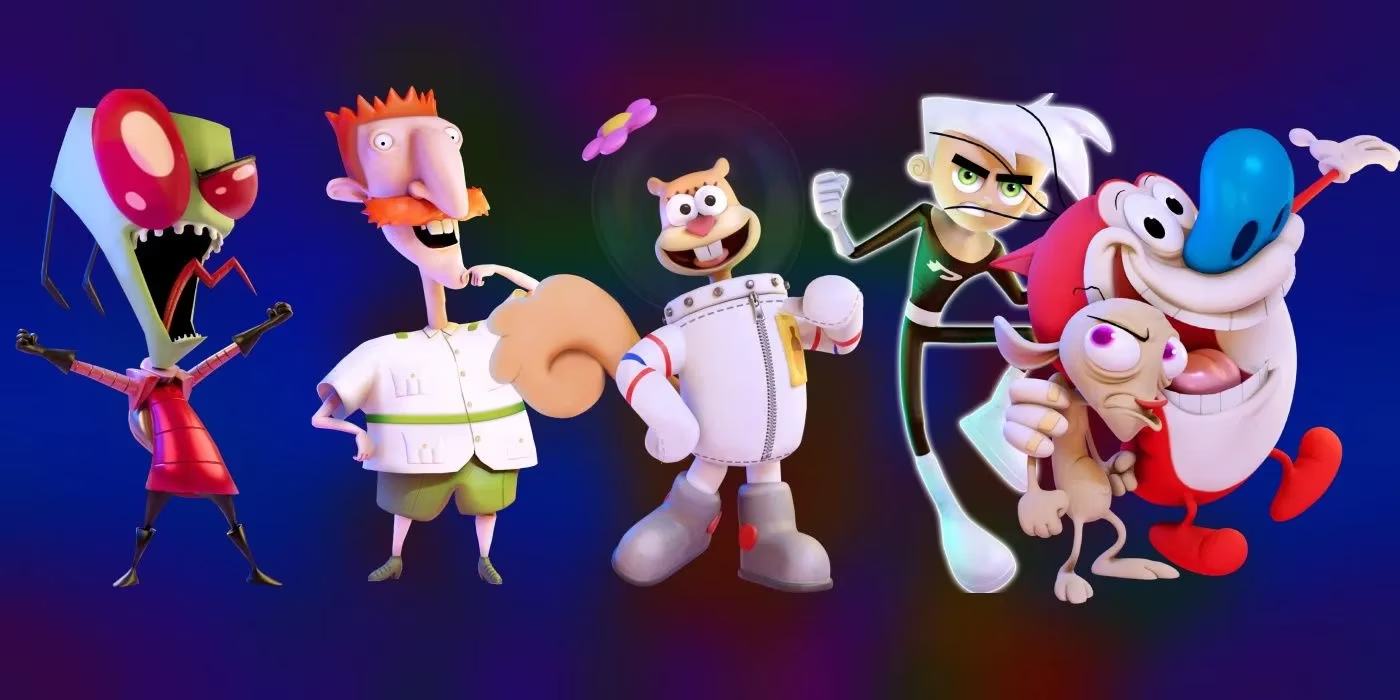
| Character | Key Strength | Notable Limitation |
|---|---|---|
| Zim | Obnoxious zoning and setup play | Can struggle under pressure |
| Nigel Thornberry | Unorthodox moveset & high survivability | Smashing moves can be predictable |
| Sandy Cheeks | Annoying combo strings & good recovery | Lost her early infinite exploit |
| Danny Phantom | Solid punishers & floaty ghost physics | Requires precise execution |
| Ren & Stimpy | Strong KO potential on specials | Moves are often highly punishable |
The Underdogs: C-Tier and Below
Characters in the C-Tier often struggle to keep up with the game's optimized meta, requiring significantly more effort for comparable results.
-
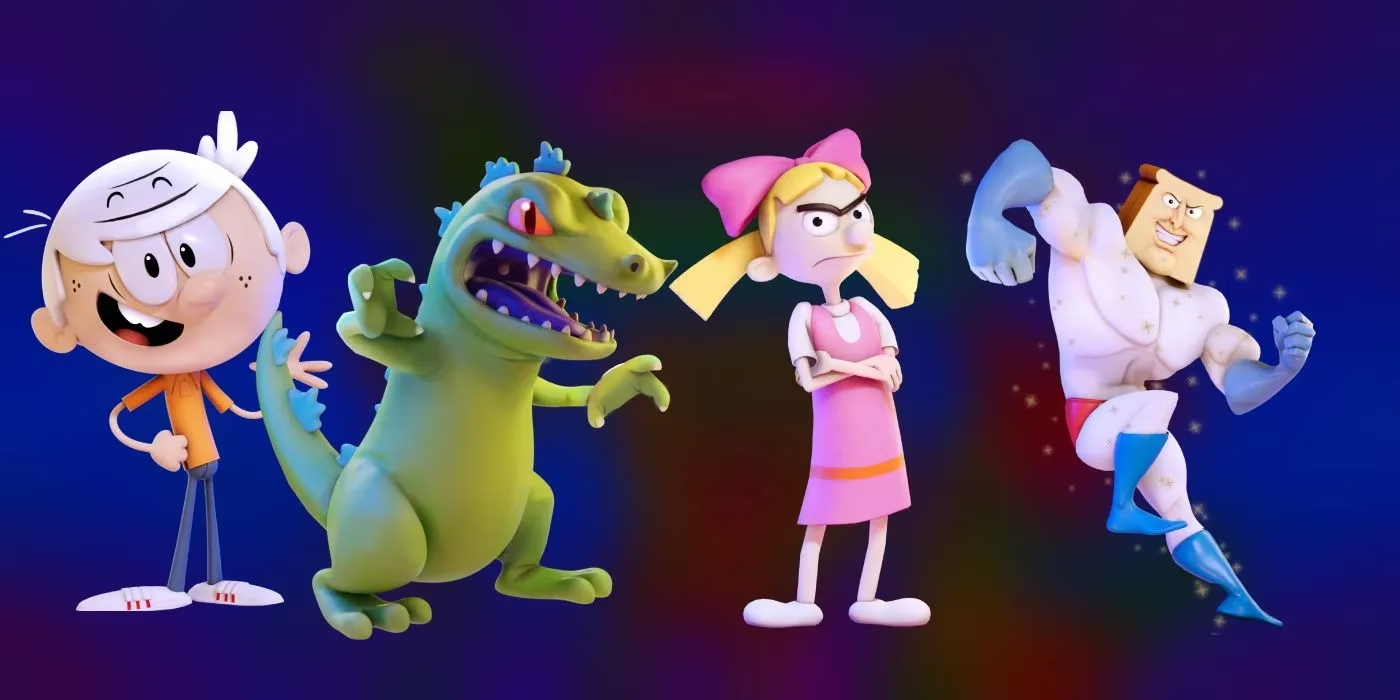
Lincoln Loud: While fast, his attacks lack the combo-ability or knockout power of his peers, making him feel like a sprinter without a finish line.
-
Reptar: The classic heavy hitter has strong moves but is often sidelined due to his limited mobility and predictable gameplan.
-
Helga: She possesses a plethora of interesting, character-ful moves that, unfortunately, have notorious difficulty connecting reliably.
-
Powdered Toast Man: His large size makes him a combo feast for opponents, crippling his viability despite his comical and fancy moveset.
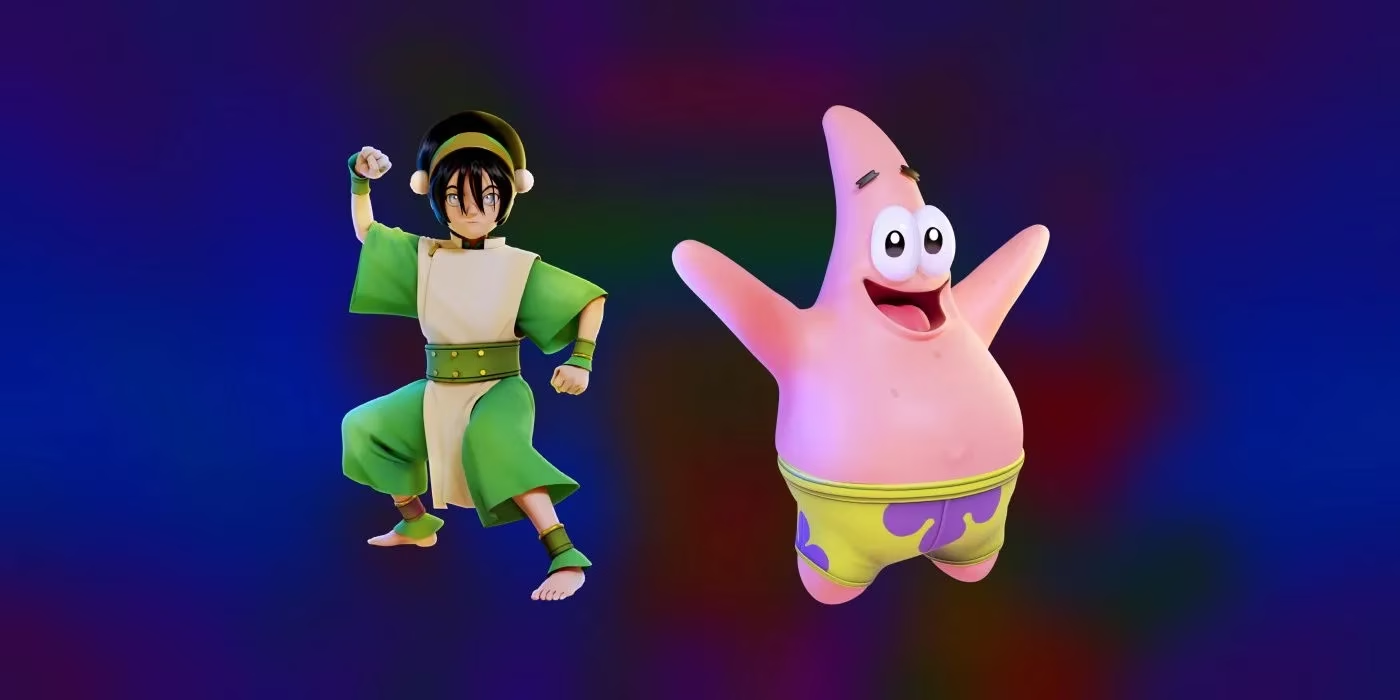
The lower tiers tell stories of unfulfilled potential. Korra (D-Tier) has languished due to an odd recovery and a lack of dedicated players to unlock her meta, leaving her as an enigmatic question mark. In the F-Tier, Toph's creative earthbending is hamstrung by slow move speed, while Patrick Star's poor range, sluggish attacks, and tragically punishable recovery—though faithful to his character—render him non-viable in serious competition, standing out like a balloon animal in an armory.
As of 2026, Nickelodeon All-Star Brawl's tier list reflects a game that has settled into its competitive identity. The shifts have been less about seismic upheavals and more about the refinement of knowledge and optimization within the framework established years ago. The S-Tier characters remain the gold standard of efficiency, while the lower tiers serve as a testament to the challenges of balancing a cast pulled from decades of animated history. The game continues to be a vibrant, if niche, part of the platform fighting game community, where understanding these tiers is the first step toward mastery.
Comments