
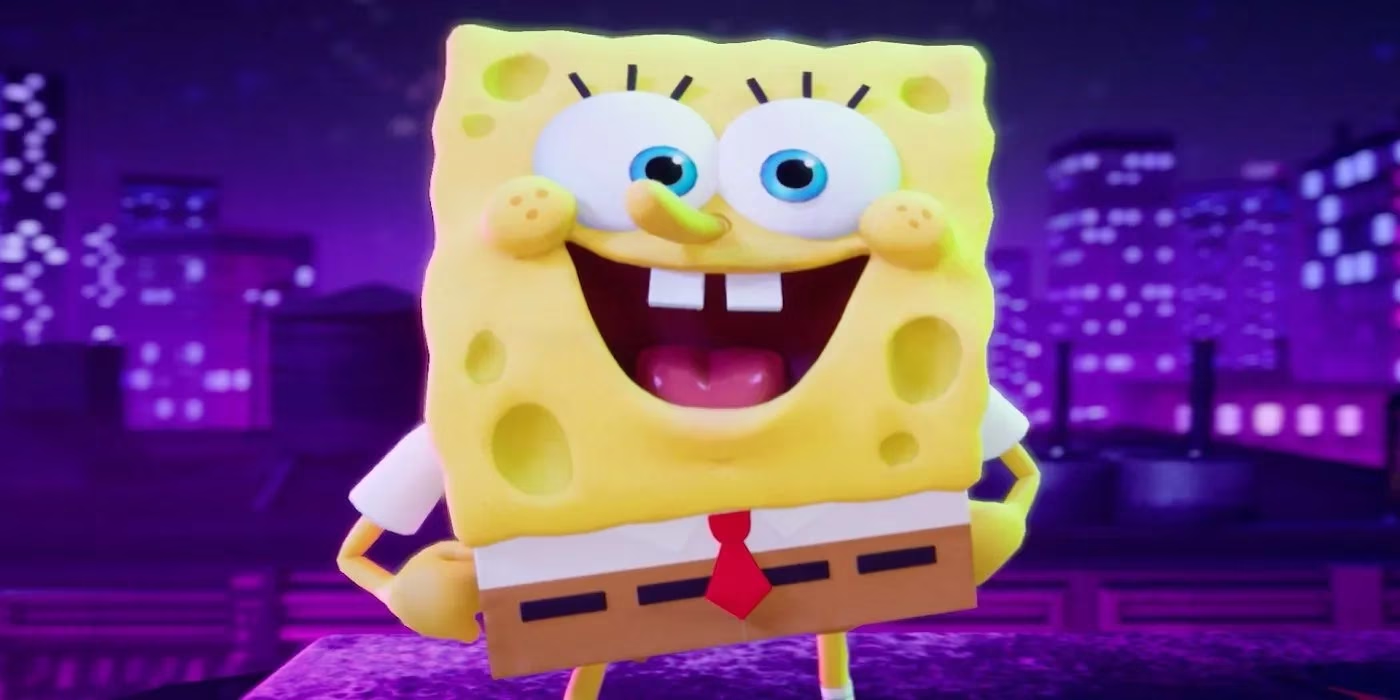
The upcoming Nickelodeon All-Star Brawl has generated significant excitement within the gaming community, not just for its nostalgic character roster but for its technical implementation that addresses longstanding issues in the fighting game genre. While the game clearly draws inspiration from Nintendo's Super Smash Bros. franchise with its platform fighter mechanics, developer Ludosity has made a crucial decision that sets it apart: the implementation of rollback netcode for online play. This technical feature, confirmed through the studio's Discord channel and subsequently shared across social media platforms, represents a significant advancement for competitive fighting game enthusiasts who have long demanded better online functionality.
Rollback netcode fundamentally transforms the online fighting experience by predicting player inputs during matches, effectively eliminating the frustrating delay issues that plague delay-based netcode systems. For fast-paced fighting games where split-second reactions determine victory or defeat, this technology ensures that moves register accurately regardless of internet connection quality. The system works by creating multiple potential game states simultaneously, allowing it to instantly "roll back" and correct when actual input data arrives, creating a remarkably smooth online experience that feels nearly identical to local play.
Why Rollback Netcode Matters for Fighting Games:
-
🎮 Eliminates input delay that disrupts gameplay flow
-
⚡ Compensates for varying internet connection qualities
-
🔄 Creates seamless online matches that feel responsive
-
Essential for competitive tournament play
This technical implementation places Nickelodeon All-Star Brawl alongside other modern fighting games that have embraced rollback netcode, such as Guilty Gear Strive and The King of Fighters XV. The fighting game community has increasingly demanded this technology as standard practice, often criticizing new releases that omit it. Ludosity's decision to include rollback netcode demonstrates their commitment to creating a serious competitive platform fighter rather than merely a casual party game.
The irony isn't lost on fighting game enthusiasts that Nickelodeon's entry into the platform fighter genre may offer superior online functionality compared to Nintendo's Super Smash Bros. Ultimate, the very title it emulates. Despite Ultimate's critical acclaim for its massive roster and refined gameplay mechanics, its online component has consistently been cited as its weakest aspect. The absence of rollback netcode in Nintendo's flagship fighter has been a point of contention within the competitive community, making Ludosity's implementation particularly noteworthy.
Beyond the netcode revelation, Ludosity has confirmed another feature that will excite competitive players: wavedashing. This advanced technique, popularized in Super Smash Bros. Melee, allows characters to slide short distances by exploiting game physics. While never intentionally designed into the original GameCube title, wavedashing became essential for high-level play and has been warmly received by the competitive community as a confirmed mechanic in Nickelodeon All-Star Brawl.
Technical Features Comparison:
| Feature | Nickelodeon All-Star Brawl | Super Smash Bros. Ultimate |
|---|---|---|
| Netcode Type | Rollback | Delay-based |
| Wavedashing | Confirmed | Not present |
| Platform Availability | Multi-platform | Nintendo Switch exclusive |
As Nickelodeon All-Star Brawl prepares for its fall release on Nintendo Switch, PlayStation 4, PlayStation 5, Xbox One, and Xbox Series X/S, the inclusion of rollback netcode positions it as a serious contender in the competitive fighting game scene. While the game's appeal to Nickelodeon fans is undeniable with characters spanning decades of animated history, its technical foundations suggest Ludosity aims to create an experience that respects both casual fans and competitive players alike. The developer's attention to these technical details demonstrates an understanding of what modern fighting game audiences expect from their online experiences.
Comments