
Looking back from 2026, I can't help but chuckle at how much the conversation around platform fighters has evolved. When Nickelodeon All-Star Brawl first hit the scene, the comparisons to Super Smash Bros. were, well, inescapable. As a professional player who's lived through its development, I remember diving into those initial gameplay trailers with a mix of skepticism and pure, unadulterated nostalgia. Seeing SpongeBob square off against Catdog on a stage that looked ripped from Hey Arnold? It was a bizarre, wonderful fever dream. The core loop was familiar—build up damage percentages to launch your opponent off the stage—but even from those first glimpses, you could tell this wasn't just a simple clone. It was carving out its own weird, wonderful space in the genre, and honestly, that's what kept me hooked.
The Nostalgic Roster & Unique Movesets
Let's talk about the heart of the game: the characters. The roster was a wild love letter to anyone who grew up with a TV remote glued to their hand. We had:
-
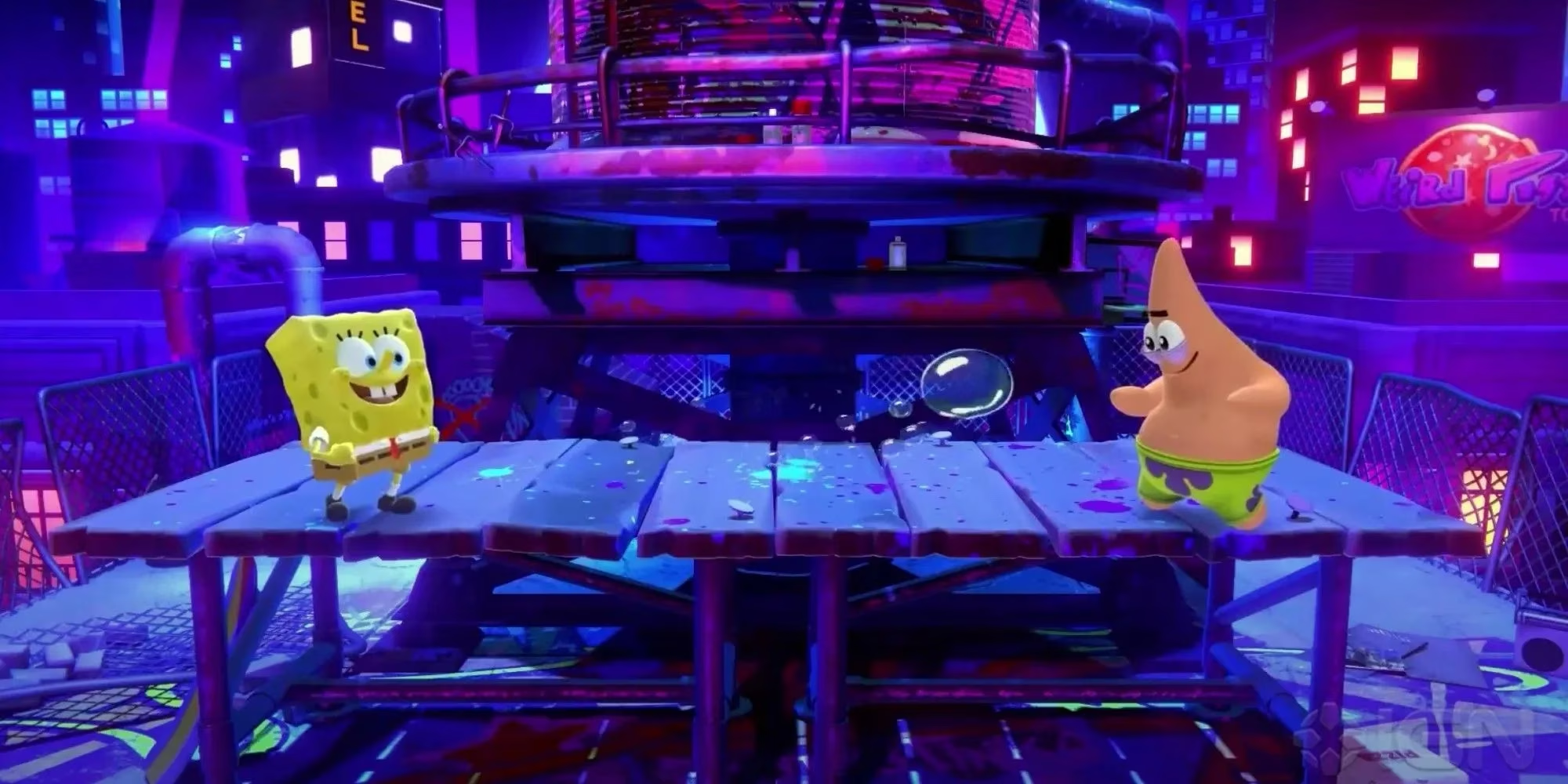
SpongeBob SquarePants – Bubbles for days! His projectile game was surprisingly intricate.
-
Patrick Star – The man, the myth, the legend... and his devastating, screen-shaking belly flop.
-
April O'Neil (TMNT) – Swinging that microphone boom like a pro, proving reporters can throw down.
-
Ren & Stimpy – Pure, chaotic id in fighter form.
-
Catdog – A two-in-one fighter with a moveset that was as confusing for the opponent as it was for the creature itself.
Each fighter's moveset wasn't just a collection of hits; it was a personality quiz. Playing SpongeBob felt optimistic and tricky, while Patrick was all about raw, unpredictable power. It was clear the developers wanted you to feel like the character, not just control a hitbox. That attention to detail, for a game built on cartoon mayhem, was a real game-changer.
The Great Item Debate & A New Combat Philosophy
Now, here's where things got spicy. One of the first things I—and every other Smash veteran—noticed was the stark, empty sky. No items. Zip. Zero. Nada. In Super Smash Bros., items are like the chaotic spice that keeps every match unpredictable. Their absence in All-Star Brawl sent a clear message: this was about pure, unadulterated skill and character mastery. No lucky Bob-omb spawn was gonna save you here, buddy. You had to know your kit inside and out.
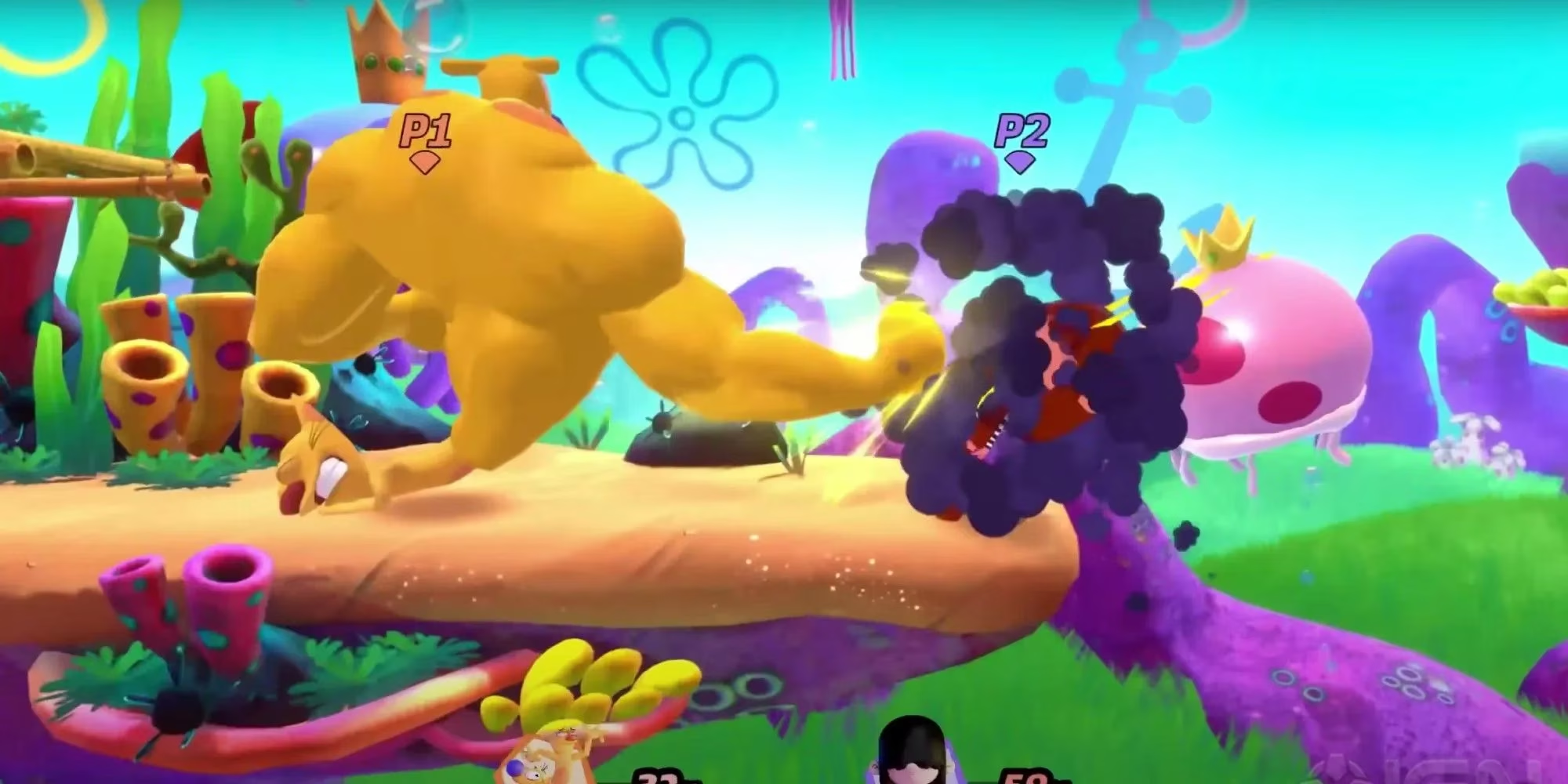
This philosophy extended into a combat system that was deceptively deep. It wasn't just about mashing buttons; it was a mental game of rock-paper-scissors with your fists.
| Attack Direction | Beats... | Effect on Opponent |
|---|---|---|
| Down Attack | Mid Attacks | Causes a stagger, opening them up for a combo. |
| Mid Attack | Up Attacks | Spins the foe around, disorienting them. |
| Up Attack | Down Attacks | Flips the opponent over, often setting up for an aerial follow-up. |
This layer of strategy meant you couldn't just spam one good move. You had to read your opponent's habits and counter them directly. It added a delicious layer of mind games that felt fresh. Plus, blocking was infinite! No more nervously watching your shield chip away. But don't think it made defense easy—it just changed the dynamic entirely.
Projectiles, Recovery, and Defining a New Meta
The differences kept coming. Ranged attacks, like SpongeBob's bubbles, became this intense back-and-forth volley. It wasn't just about reflecting them once; you could keep the rally going until someone finally flubbed their timing. It felt more like a tense tennis match than a traditional fighting game zoning tool.
And oh man, the recovery game... talk about a breath of fresh air! In Smash, falling off-stage often feels like a death sentence with only your double jump and up-special to save you. All-Star Brawl seemed to offer more options, more ways to squirm your way back from the bottom of the screen. It made edge-guarding—the art of keeping your opponent off-stage—a more complex and thrilling cat-and-mouse game. You couldn't just rely on one trick; you had to adapt.
Looking back from 2026, Nickelodeon All-Star Brawl wasn't the "Smash killer" some hyped it to be, and that's perfectly okay. It was something better: a confident, quirky alternative that dared to ask, "What if we did it this way?" It stripped away the random items, added deliberate directional counters, and gave us a roster that fought with pure personality. It carved its own niche, proving that the platform fighter genre had room for more than one champion. For a pro player like me, it was a fascinating new puzzle to solve, a new language of combat to learn, and above all, a ridiculously fun tribute to the cartoons that shaped our childhoods. Not too shabby for a game about a talking sponge, huh?
Comments