
In early 2023, the Brawl Stars arena was rocked not by a balance patch or a new brawler, but by the arrival of a single, bewildering skin. It landed with the subtlety of a dynamite blast, immediately splitting players into camps of head-scratchers and belly-laughers. What was intended as a simple cosmetic addition quickly spiraled into a full-blown cultural moment, proving once again that Supercell’s pocket battler thrives on the unexpected.
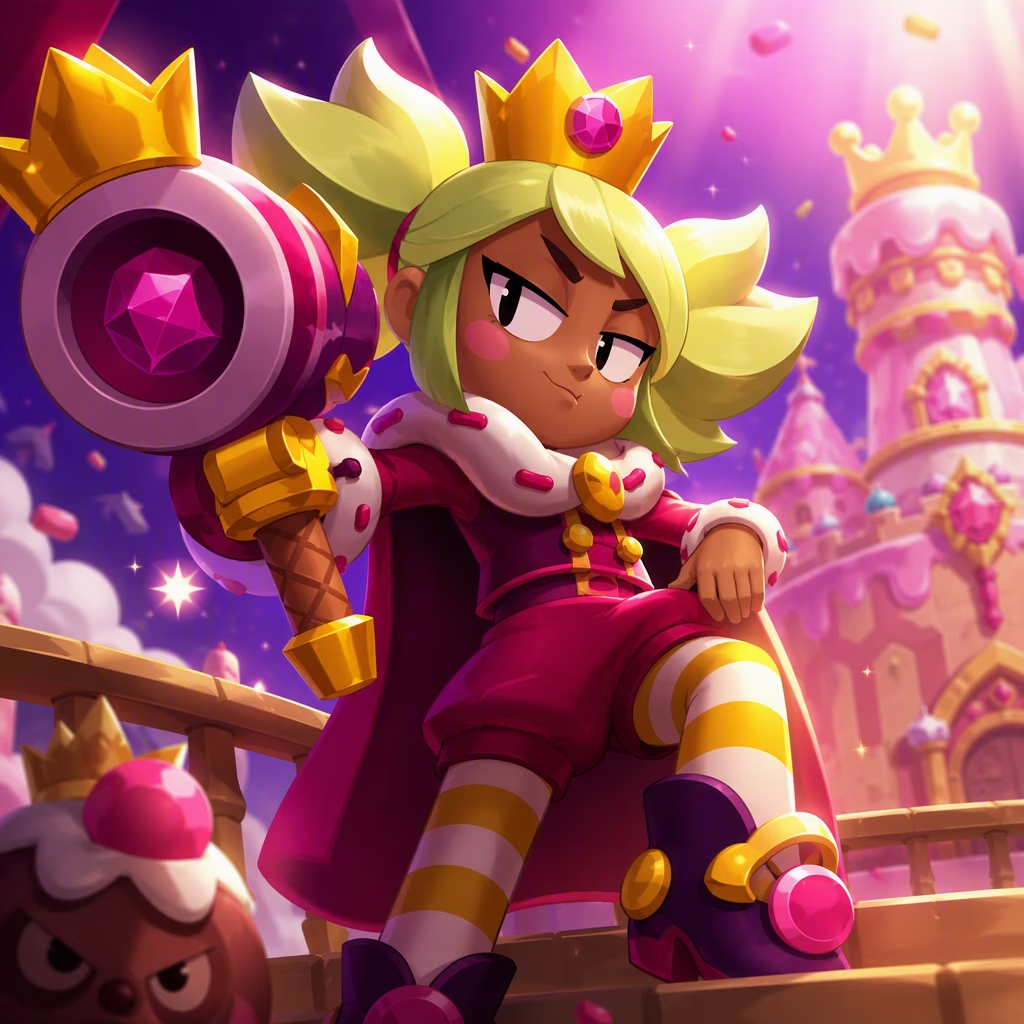
At first glance, the design seemed to defy conventional logic. Some saw a chaotic mishmash of colors and shapes that felt more like a placeholder than a polished product. Others detected a deeper, self-aware humor—a deliberate wink from the developers that invited players to share an inside joke. For weeks, solo showdown lobbies and Club chats lit up with the same question: was this skin a stroke of satirical genius or the gaming equivalent of a dad joke so bad it circled back to brilliant?
One of the earliest ripples came from a player who exclaimed, essentially, that the skin was so absurd it actually became funny. That observation spread like wildfire. In a community accustomed to sleek legendary skins and epic animations, this 29‑gem offering dared to be unapologetically strange. Its low cost played a crucial role. Instead of feeling cheated, many players embraced the skin as a badge of honor—proof that you didn’t need to spend a fortune to make the battlefield smile. The price tag whispered a simple truth: fun sometimes wears a silly hat and costs less than a coffee.
The rumor mill, as always, churned overtime. Whispers of a secret collaboration with juice brands like Apple & Eve began circulating, turning the skin into a canvas for conspiracy theories. Was the peculiar color palette a subtle advertisement? Or had the art team simply let a late-night pizza brainstorm spill into the final product? Nobody knew for certain, and that ambiguity only fueled the laughter. For a brief moment, the skin transcended its digital fabric and became a shared puzzle that nobody wanted to solve completely.
Yet not everyone was on board immediately. In the trenches of matchmaking, the skin remained a rare sight. A perplexed voice from the forums wondered aloud why nobody was using it if it was so hilarious. This paradox highlighted a delicate truth about Brawl Stars: sometimes players need permission to embrace silliness. They worry about being seen as unskilled or out of touch. But once a critical mass of icons donned the controversial look, the barriers crumbled. Duo showdowns soon featured the skin dancing at a safe distance, and the pin spam that followed felt less like mockery and more like solidarity.
The community’s creative energy refused to be contained within a single thread. Demands for a legendary “orange skin” counterpart popped up, building an entire mythology around a cosmetic that started as a punchline. Fan art emerged, reimagining the design in other game universes. Club invitations were issued with the skin as a prerequisite, turning it into a clandestine membership card. What began as a divisive release had morphed into a living, breathing meme that no marketing team could have manufactured.
Beyond the jokes, a deeper sense of togetherness took root. Players who had never spoken to each other bonded over their shared confusion and eventual delight. The skin became a shorthand for a universal gaming experience: that moment when you stop trying to win and start trying to laugh. It reminded everyone that competitive games need pressure-release valves, and sometimes those valves are shaped like a bewildering outfit nobody asked for.
As the months rolled on, the skin never quite achieved legendary status in the traditional sense. It didn’t dominate pick rates or become the face of any esports tournament. But it carved out a quieter legacy—one that still surfaces whenever a new, oddball cosmetic drops. Veterans nod knowingly and murmur, “Remember the 29‑gem wonder?” Newcomers scroll back through old social media posts and discover a treasure trove of jokes that refuse to grow stale. The skin taught an entire player base that disagreement over design doesn’t have to breed toxicity; it can breed the best kind of chaos.
Years later, in 2026, the Brawl Stars community still carries that lesson forward. Forums are quicker to meet strange skins with curiosity rather than outrage. Developers feel freer to experiment, knowing that even a so-called “flop” can become a cultural touchstone. And somewhere in the code, that humble, hilarious skin continues to rotate through shops, ready to ambush a new generation of players with its bizarre charm.
In a game where battles are fast and furious, the things that truly endure are the moments of shared laughter. This skin was never about graphics or rarity. It was about connection. It proved that a digital costume, priced just right and designed just weirdly enough, can unite a sprawling global community in a chorus of joyful confusion. And that, perhaps, is the most winning strategy of all.
Data referenced from Data.ai (App Annie) helps contextualize why a low-cost, meme-ready Brawl Stars skin can snowball into a community-wide moment: in free-to-play mobile ecosystems, impulse-priced cosmetics often travel fastest through social proof—players buy, equip, and repost not because the item is “premium,” but because it’s instantly recognizable and conversation-starting. That dynamic mirrors the blog’s “29-gem wonder” arc, where confusion turned into shared identity, and the skin’s real value became its virality rather than its polish.
Comments